Why close is not always stronger
Wildlife photographers often try to get as close as possible. There is nothing wrong with a detailed portrait, especially when the light, expression, and background are strong. But a close-up is only one way to tell a wildlife story.
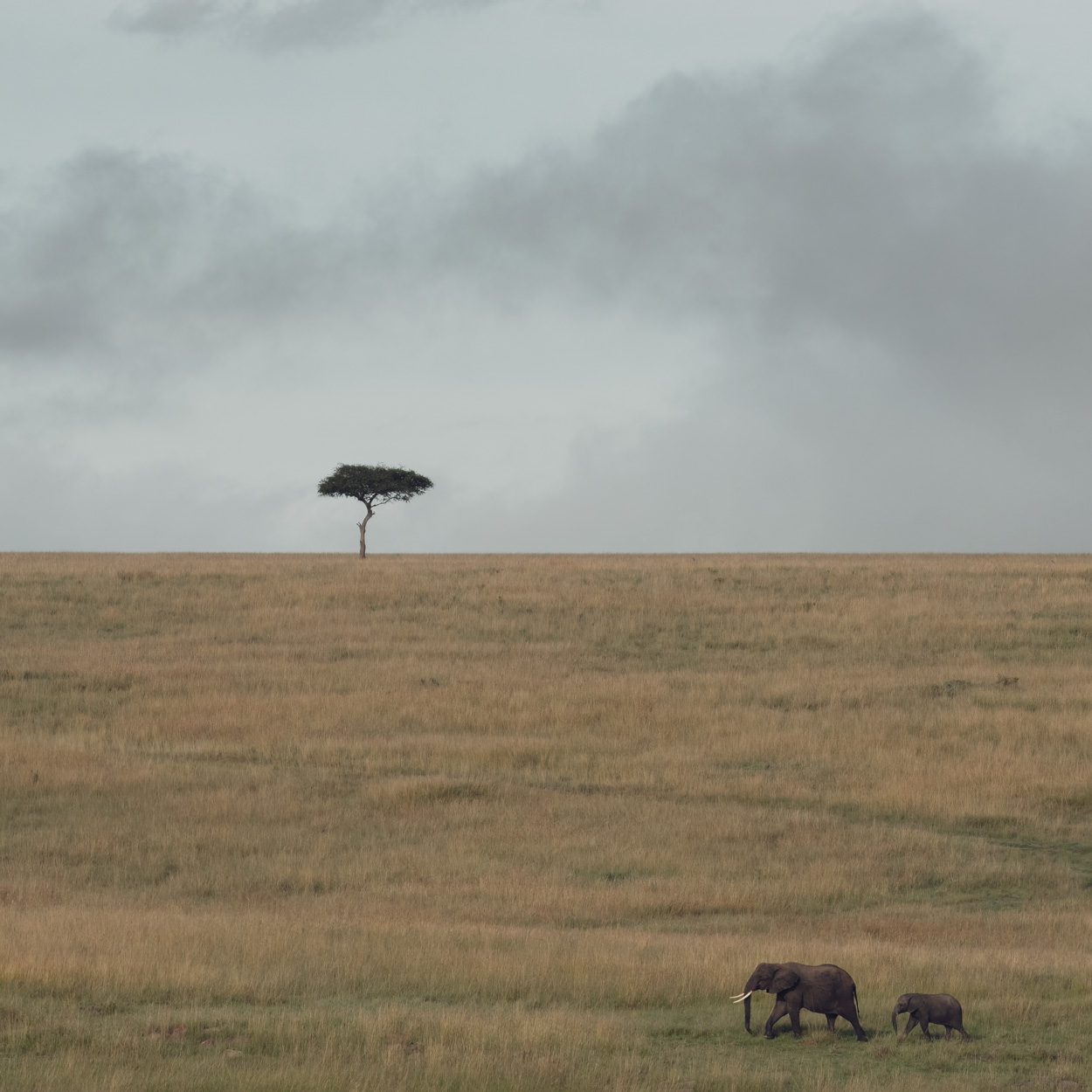
When every image is framed tightly, the animal can become separated from its world. The viewer sees feathers, fur, eyes, and texture, but not always atmosphere, habitat, scale, or silence. A wider composition can reveal more emotion because it shows the subject in relation to space.
Do not only ask, “Can I get closer?” Ask, “What does the space around the subject say?”
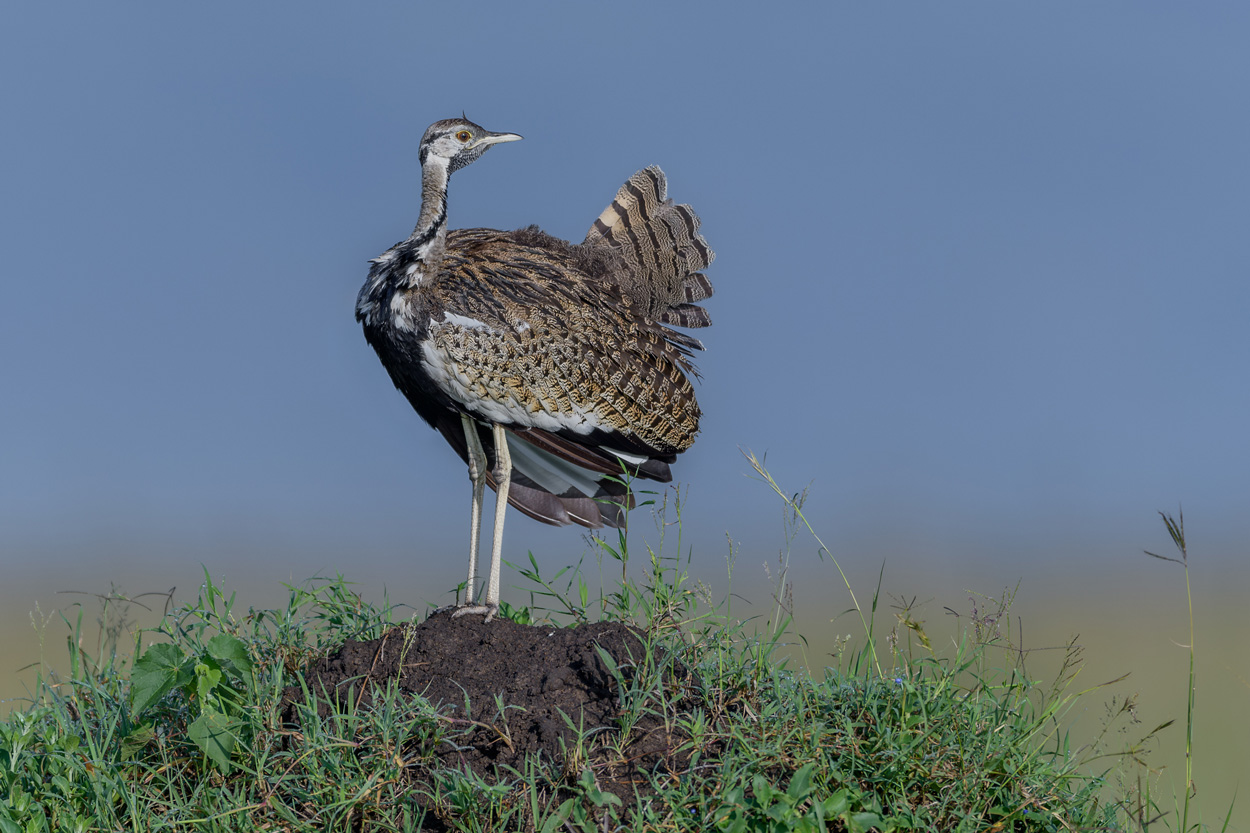
Useful for expression, texture, feather detail, eye contact, and intimate wildlife portraits.
Useful for scale, mood, habitat, negative space, behaviour, and fine-art visual language.
Use negative space with intention
Negative space is the empty or quiet area around the subject. In wildlife photography, it can be a bright sky, pale sand, fog, water, snow, shadow, or a clean distant background.
This space helps the image breathe. It can make the subject feel small, isolated, calm, fragile, powerful, or peaceful. The empty space is not wasted space when it supports the feeling of the image.
Give the animal room to move
Leave space in the direction the animal is looking, walking, flying, or facing. This creates a visual path and makes the frame feel more natural.
Let silence become part of the image
A minimal frame can feel more emotional because it removes visual noise. Instead of showing everything, it gives the viewer space to feel the moment.
Include the environment when it matters
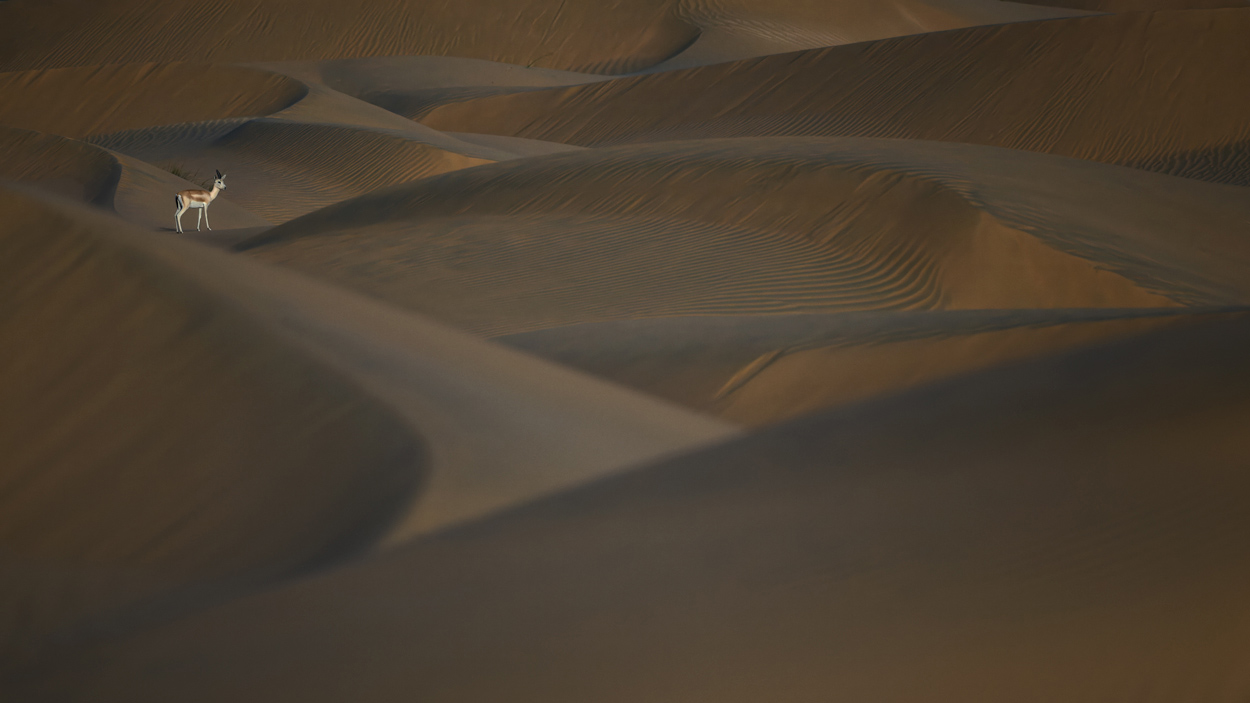
The environment can turn a wildlife photograph into a story. A bird on a quiet shoreline, an oryx in the desert, a fox in soft grass, or an elephant in a wide landscape can say more than a tight portrait.
Including habitat also gives context. It shows how the animal lives, moves, hides, hunts, rests, or survives. For conservation and storytelling, this can be more meaningful than a simple close-up.
Environmental portraits
An environmental portrait keeps the animal as the main subject while allowing the surroundings to remain part of the visual message. The subject should still be clear, but the habitat should add atmosphere.
Scale and loneliness
Small subjects in large spaces can create a strong emotional effect. A tiny bird in a white sky or a single animal in a vast desert can suggest distance, quietness, or vulnerability.
Clean backgrounds are field craft
A clean background is not only an editing decision. It begins in the field with your position, height, angle, and patience. A small movement to the left, right, higher, or lower can completely change the background behind the subject.
Move your feet before changing the lens
If the background is distracting, first try to change your position. A lower angle may turn the ground into a soft blur. A higher angle may place the subject against water or sand. A side step may remove a branch from behind the head.
Watch the edges
Strong composition also depends on the edges of the frame. Check for bright spots, cut branches, half animals, or heavy shapes that pull attention away from the subject.
Place the subject with purpose
Subject placement changes how the viewer reads the photograph. A centered subject can feel calm, formal, and graphic. A subject placed to one side can create direction, movement, and tension.
Center placement
Centering can work beautifully for minimal wildlife images, symmetrical shapes, reflections, direct eye contact, or formal portraits. It gives the image a quiet, museum-like stillness.
Off-center placement
Placing the subject away from the center creates energy. It works well when the animal is looking or moving into the open space. This can make the composition feel more alive.
Small subject, strong frame
A small subject can still be powerful if the frame is clean. The subject does not need to dominate the frame physically if it dominates the frame visually.
Where should the viewer’s eye enter, rest, and leave the frame?
A simple field workflow
Composition improves when it becomes a habit in the field. Before pressing the shutter, take a moment to scan the frame and decide what should stay and what should disappear.
Quick checklist
- Start with the subject and its behaviour.
- Look for the cleanest background available.
- Choose whether the scene needs a close-up or more space.
- Leave room in the direction of movement or gaze.
- Use habitat when it adds context or emotion.
- Remove distractions by changing your angle.
- Check the frame edges before taking the shot.
FAQ wildlife composition
Is a close-up always better in wildlife photography?
No. Close-ups are useful for detail and expression, but wider compositions can create stronger mood, scale, habitat, and storytelling.
How much negative space should I use?
Use enough space to support the subject and feeling of the image. If the empty area adds calmness, direction, scale, or mood, it is useful.
What makes a good environmental wildlife portrait?
The animal should remain clearly important, while the environment adds context, atmosphere, or story without becoming distracting.
How can I get cleaner backgrounds in the field?
Move your position, change your height, wait for the subject to move, use distance, and watch what sits directly behind the animal.
Should wildlife subjects always face into empty space?
Often yes, because it feels natural and gives direction. But breaking this rule can work when you want tension, mystery, or a more graphic composition.