A balanced view of AI
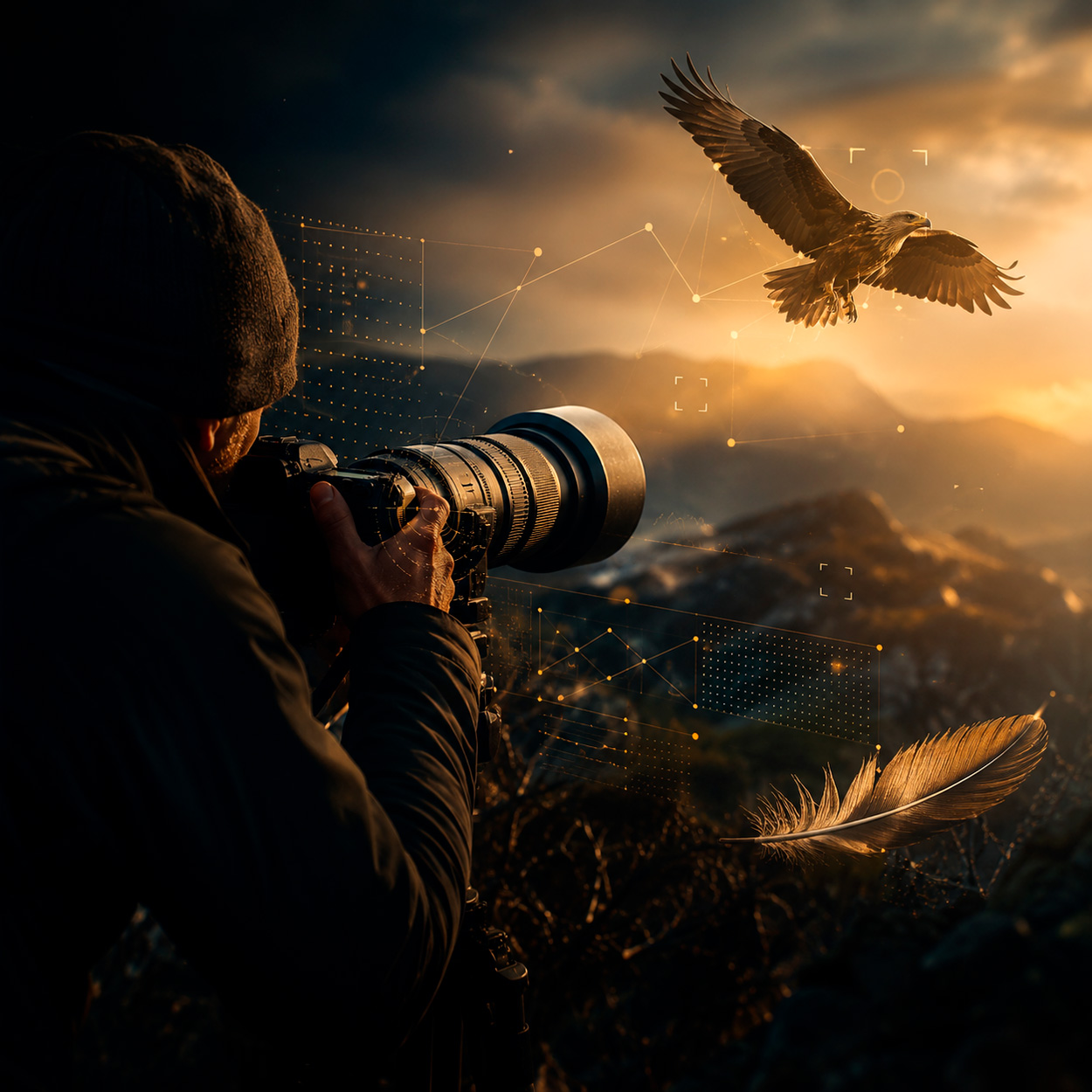
Artificial intelligence is now part of the photography world. It appears inside editing software, camera workflows, search tools, writing tools, and marketing systems. Some photographers see it as a threat. Others see it as a useful assistant. The truth is more balanced.
AI is not automatically good or bad. It depends on how it is used. It can save time, improve workflow, and help photographers communicate better. It can also create confusion, reduce trust, and make images feel less authentic when used without care.
AI should support the photographer’s vision, not replace the photograph’s truth
AI can help with workflow, organization, masking, noise reduction, writing, research, and presentation.
AI becomes dangerous when it replaces real field experience, changes the truth of a scene, or misleads the viewer.
The good side of AI for photographers
Used carefully, AI can remove repetitive tasks and give photographers more time for the important work: being in the field, observing behaviour, improving composition, printing, and building meaningful projects.
Faster editing workflow
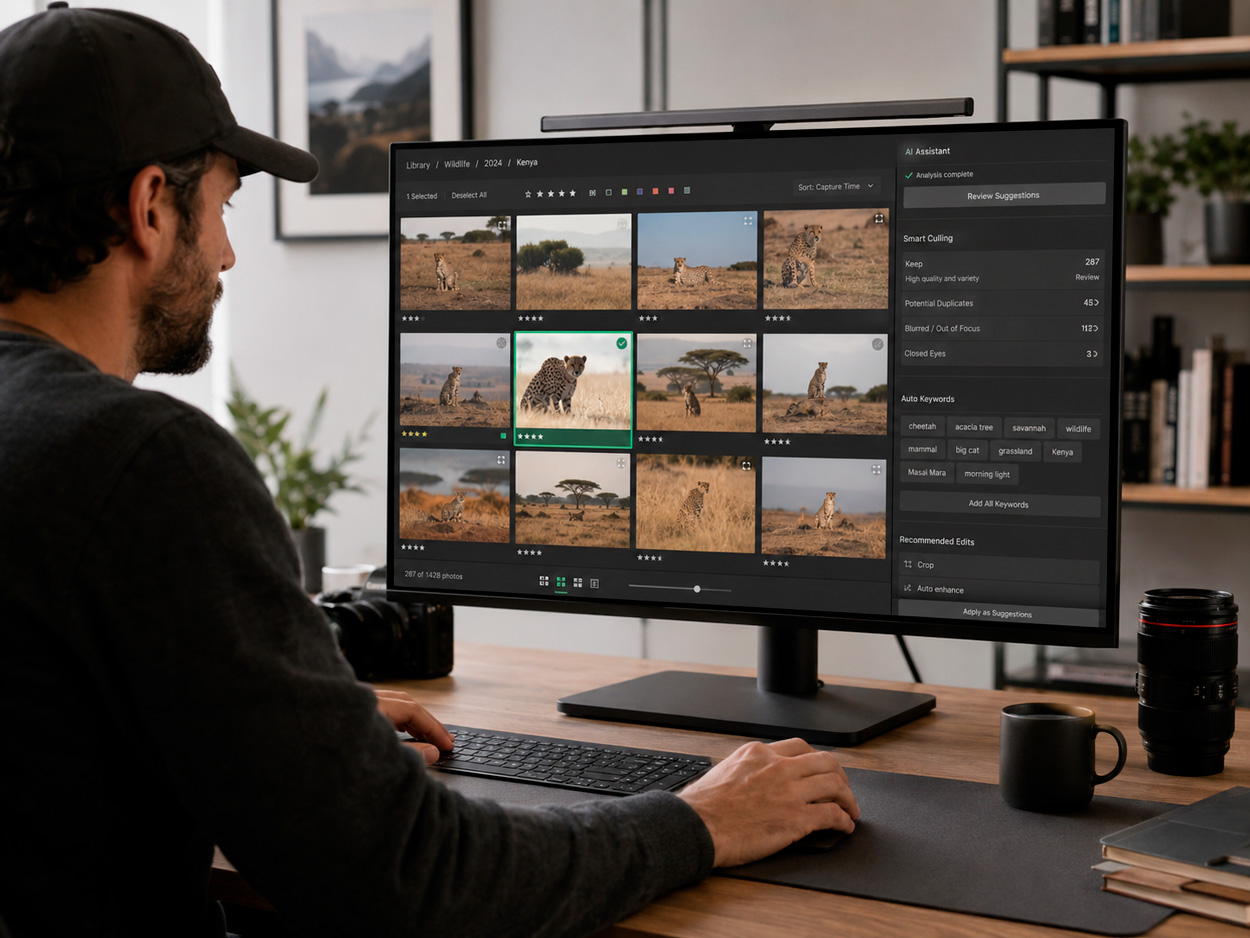
AI-powered masking, subject selection, noise reduction, sharpening, and image search can speed up the editing process. This does not mean the software creates the photograph. It simply helps the photographer reach a refined result with less repetitive manual work.
Better organization and image discovery
Large archives can be difficult to manage. AI can help search by subject, location, colour, mood, or visual content. For a wildlife photographer with thousands of bird and mammal images, this can be very useful.
Learning and planning
AI can explain concepts, suggest shooting checklists, help prepare blog drafts, organize portfolio ideas, and create learning material. It can be a helpful assistant for education, especially when the photographer still makes the final creative decisions.
Business and communication
Photographers often spend a lot of time writing captions, product descriptions, emails, SEO titles, print descriptions, and website text. AI can help draft these materials faster, while the photographer edits the final version to keep the personal voice and accuracy.
The bad side of AI for photographers
The risk begins when AI changes the meaning of a photograph or creates something that did not happen, while still being presented as documentary or real wildlife photography. This is where trust can be damaged.
Loss of authenticity
In wildlife and nature photography, the real moment matters. If an animal is added, moved, removed, or generated, the image may no longer represent the field experience. Fine-art interpretation is different from documentary truth, but the viewer should not be misled.
Overediting and visual sameness
AI can make images look polished very quickly. The danger is that many photographs begin to share the same dramatic sky, the same cinematic colour, the same texture, and the same perfect mood. Personal style can become weaker when the software decides too much.
Skill erosion
If AI fixes every background, replaces every mistake, and invents every missing detail, the photographer may stop improving the field craft. Patience, timing, light reading, animal behaviour, and composition are still the foundation of strong photography.
Copyright and trust concerns
AI raises difficult questions about training data, ownership, image reuse, and creative credit. Photographers should be careful when uploading private work to unknown tools and should understand how their images may be stored or used.
There is a difference between improving a photograph and inventing a photograph
What AI means for wildlife photography
Wildlife photography depends on patience, ethics, respect for the subject, and a real encounter with nature. For this reason, AI should be used with more caution than in some commercial or conceptual genres.
Acceptable support
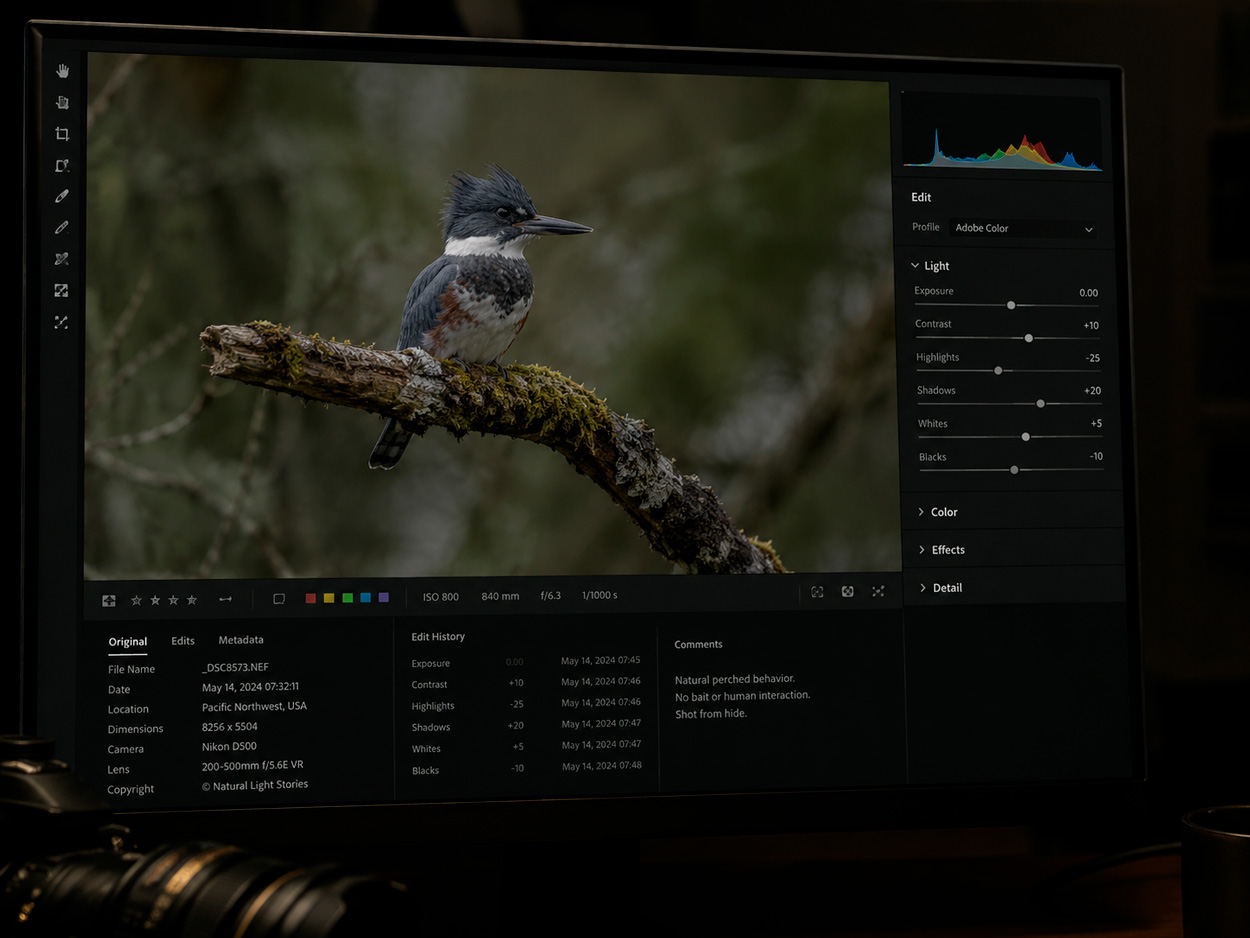
Using AI to reduce noise, improve masking, organize files, prepare website text, or plan a portfolio structure can be helpful. These uses support the original photograph without changing the truth of the scene.
Problematic use
Adding an animal that was not there, changing behaviour, replacing the background with a fake location, or presenting generated wildlife as a real photograph can be misleading. This is especially sensitive in competitions, editorial work, conservation storytelling, and educational material.
My suggested approach
The best approach is not to reject AI completely, and not to depend on it blindly. Photographers can use AI wisely by setting clear boundaries.
A simple rule
If AI helps you finish the photograph you actually captured, it can be useful. If it creates the photograph you wish you had captured, you need to decide whether you are still making photography or moving into digital art.
FAQ AI and photographers
Is AI bad for photography?
No. AI is not bad by itself. It becomes a problem when it misleads viewers, replaces real work, or damages trust in the photograph.
Can photographers use AI ethically?
Yes. Ethical use depends on transparency, intention, and the type of work. Workflow support is usually different from generating or changing the content of the image.
Should wildlife photographers disclose AI editing?
If AI changes the content of the scene, disclosure is a good practice. If it is used only for normal workflow support, such as noise reduction or basic masking, disclosure may not always be necessary.
Will AI replace photographers?
AI may replace some simple production tasks, but it cannot replace personal vision, real field experience, patience, ethics, and the emotional connection behind meaningful photography.
What is the best use of AI for nature photographers?
The best use is as an assistant: organizing archives, improving workflow, helping with writing, preparing educational material, and refining images while keeping the original moment honest.